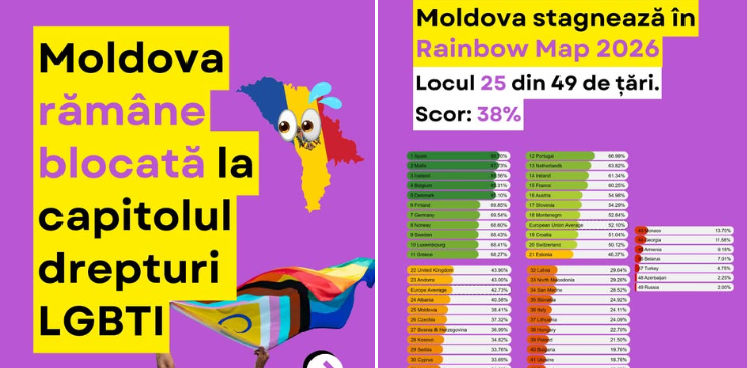
Moldova Pride 2026: 25 Editions of Visibility and Advocacy for Family Protection
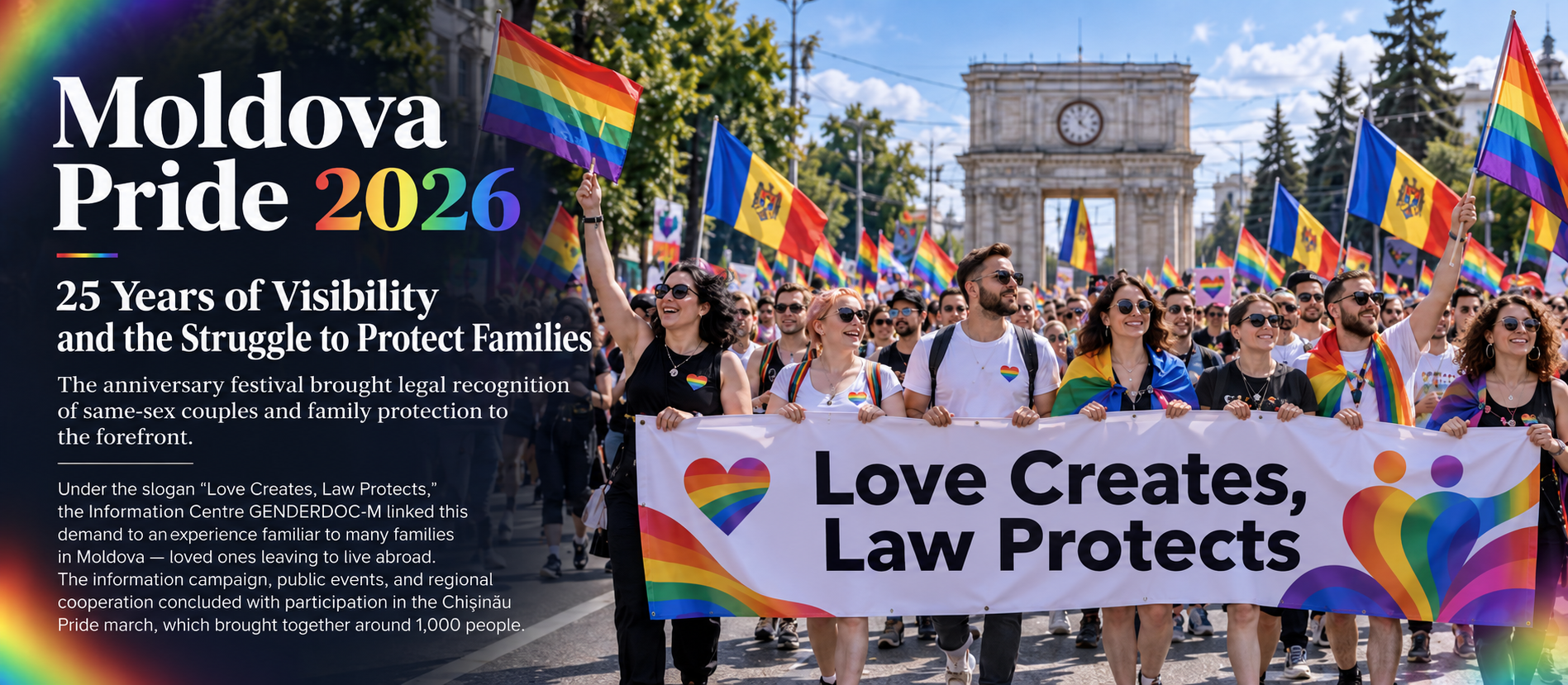
The 25th edition of the Moldova Pride Festival placed legal recognition of same-sex couples at the forefront. Under the slogan “Love creates, the law protects”, the GENDERDOC-M Information Centre connected this demand to an experience familiar to many families in the Republic of Moldova: loved ones moving abroad. The communications campaign, community events and regional cooperation culminated in participation in the Chișinău Pride March, which brought together approximately 1,000 people.
Held from 14 to 21 June, the festival featured a video campaign, parents’ personal stories, public discussions, a regional conference, workshops and arts events. The anniversary edition also provided an opportunity to document the history of the LGBTQI+ movement in the Republic of Moldova and the contributions of those who have supported it over the years.
The campaign began by asking what makes people leave and what might help them return. The official video, created by filmmaker and activist Leo Zbancă and released on 14 June, followed three stories from different periods of Moldovan emigration: leaving to survive, seeking a better life, and moving abroad to build a legally recognised family with the person one loves. By drawing connections between these experiences, GDM brought attention to the consequences of exclusion for relationships between parents and their children, and for people’s ability to build a life at home.
Monitored posts featuring the video on Facebook, Instagram, TikTok and YouTube accumulated more than 1.44 million views. On Facebook, the main distribution channel, the video reached 745,104 unique viewers and was shared 2,702 times.
The video’s message was explored further through five articles and interviews published by Nokta, Ziarul de Gardă and NordNews. Accounts from parents of LGBTQI+ people living abroad showed how acceptance within the family can coexist with geographical separation and their children’s inability to enjoy the same legal protection at home. Russian-language coverage and cooperation with regional media helped the campaign reach different audiences.
The festival officially opened on 16 June at GDM’s premises, with 52 participants in attendance. Elena Mitieva and Alexei Marcicov raised the Moldova Pride flag. Representatives of international partners joined the community for the occasion.
The festival programme also included the community’s response to discriminatory rhetoric in public life. On 17 June, the satirical event “Strachina de Jmalț”, hosted by Angelica Frolov and Cristina Miron, brought together 48 people. Through nominations based on public statements and actions, the anti-awards drew attention to homophobia, transphobia and the use of prejudice in political communication.
International cooperation played an important role in the anniversary edition. On 19 June, the Eastern European Coalition for LGBT+ Equality held the conference “Between reform and backlash: LGBT+ rights in contested democracies”, bringing together 45 participants from seven countries. Discussions focused on setbacks in human rights, the effects of European integration, disinformation and anti-gender narratives. Participants compared experiences and discussed the need for coordinated advocacy and communications responses.
On the same day, the “Inimi implicate” Award ceremony, held in the name of GDM founder Alexei Marcicov, recognised the contributions of Meije Kiel and Nigel Warner. Meije Kiel helped the organisation secure its first grant from a foreign government and develop cooperation with COC Nederland. Nigel Warner was honoured for his contribution to the protection of LGBT+ rights through international legal advocacy, including in the case of GENDERDOC-M v. Moldova. The ceremony highlighted the role of early financial support, expertise and solidarity in the organisation’s development.
On 20 June, Pride Park welcomed 876 participants at Artcor. The programme offered access to anonymous rapid testing for sexually transmitted infections, information about services and rights, creative workshops and arts activities. The Free Shop, used by 86 people, provided clothing, books and other items donated by the community free of charge.
The fair brought together 14 makers and independent businesses, alongside eight civil society organisations or initiatives. Participants had opportunities to discuss trans rights, violence prevention, gender equality and ways to get involved in community life. An exhibition and discussion on the history of the LGBTQI+ movement provided context for current demands and opportunities for activists from different generations to share their experiences.
Families were also a focus of the symbolic community weddings. These ceremonies made visible the existing relationships for which GDM is seeking legal recognition and protection. Also at Pride Park, six volunteers from Ukraine took part in an advocacy workshop, while 20 people from three grassroots groups met with representatives of the Swedish organisation RFSL to discuss their work and needs.
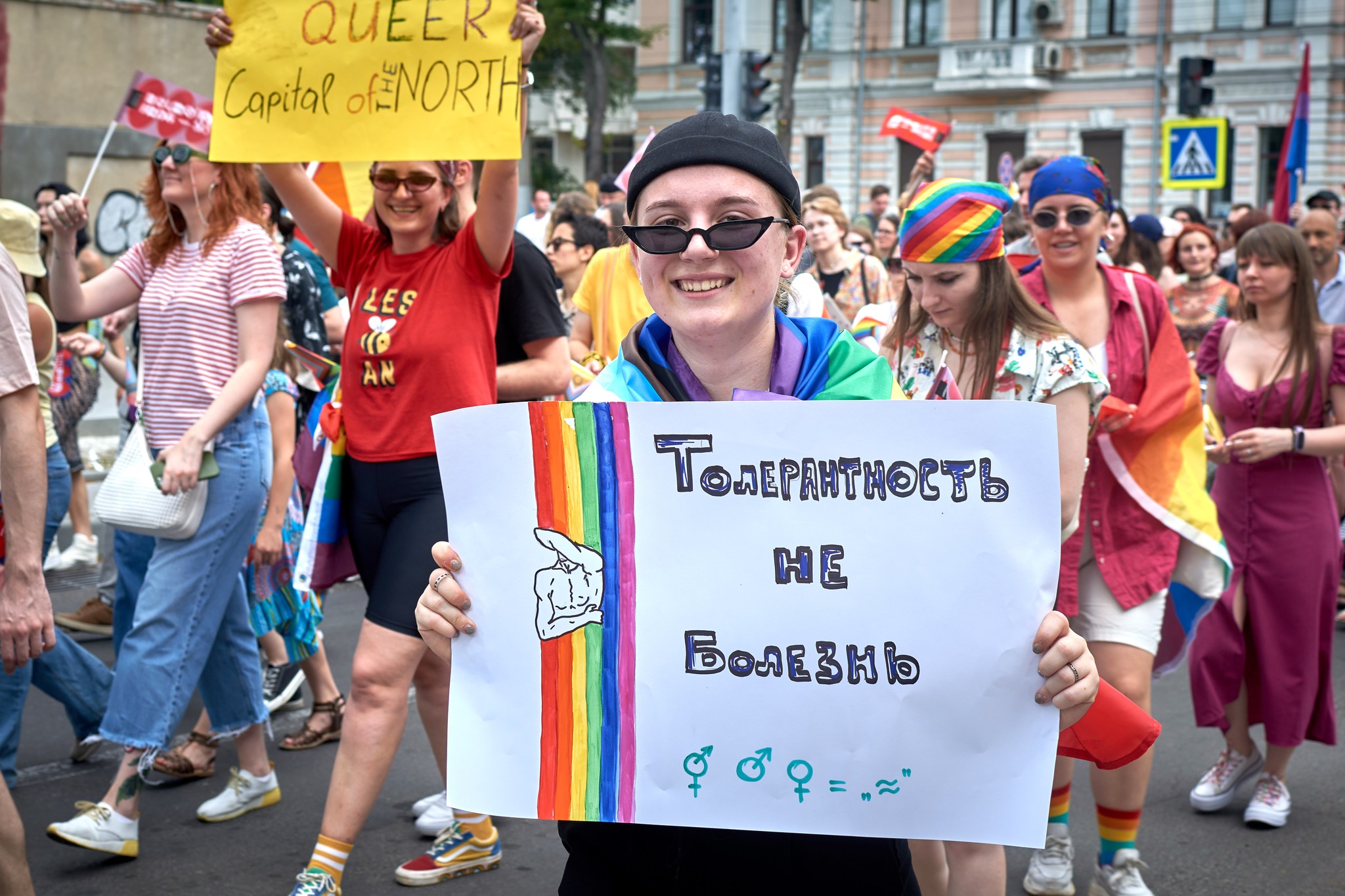
On 21 June, approximately 1,000 people took part in the 14th Pride March, held for the first time under the name Chișinău Pride and organised by the Platform of LGBTQI+ Organisations in the Republic of Moldova. GDM joined the march with a message calling for legal recognition and protection for same-sex families. The march took place without incident and was the most peaceful Pride march held in Chișinău to date.
The final day’s programme also included the discussion “The Intersection of Activism and Journalism”, featuring journalist Renat Davletgildeev and attended by 33 people. The conversation explored LGBTQI+ visibility, exile, censorship and the media’s responsibility when reporting on the experiences of vulnerable groups. Music events and community parties rounded out the festival, providing spaces for connection and artistic expression.
Moldova Pride 2026 showcased GDM’s work in public communication, community organising and the defence of LGBTQI+ rights. The festival marked its 25 editions by recognising the support it has received and advancing a demand for the future: the opportunity to live with the person one loves in the Republic of Moldova, as a family recognised and protected by law.
 26.10.2026
Community
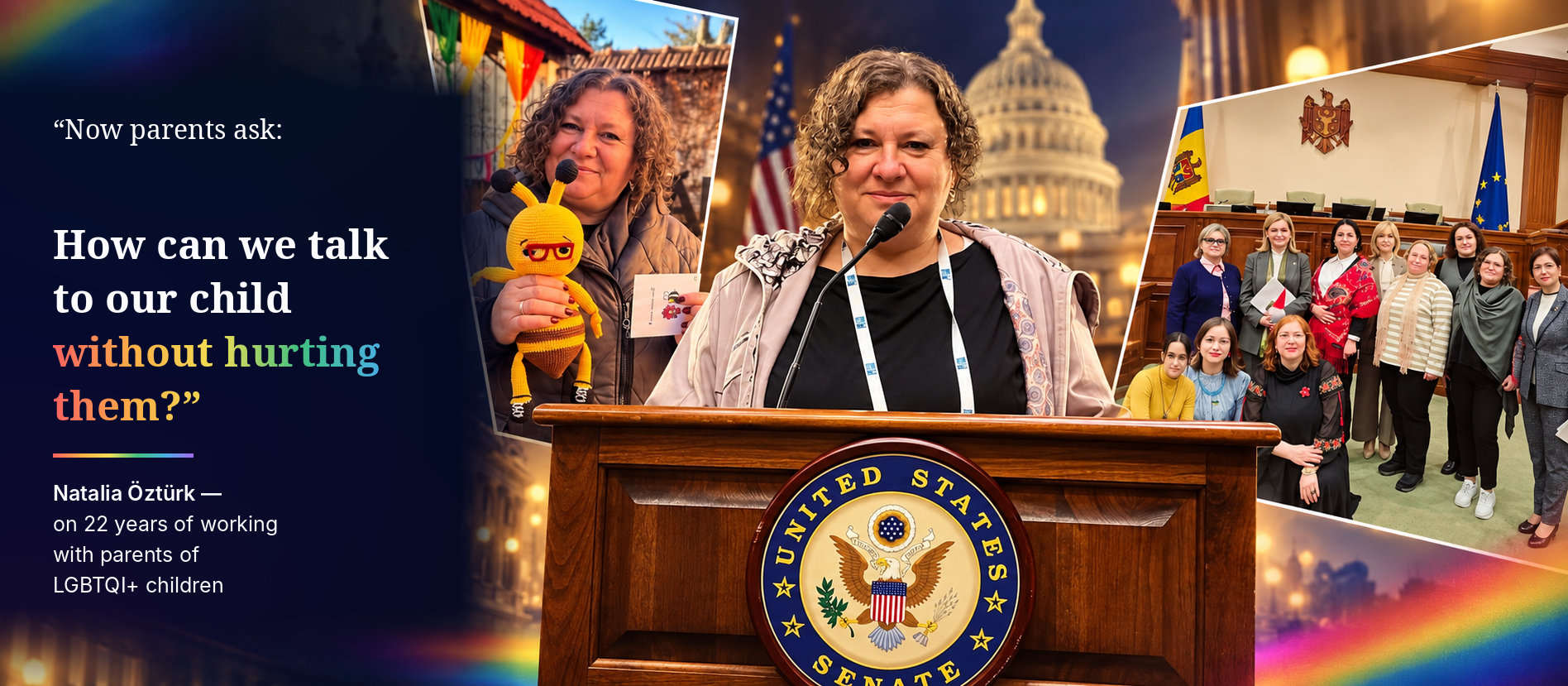
“Parents now ask: how can I talk to my child without hurting them?” Natalia Ozturk on 22 Years of Working with Parents of LGBTQI+ Children
 15.10.2026
Human Rights
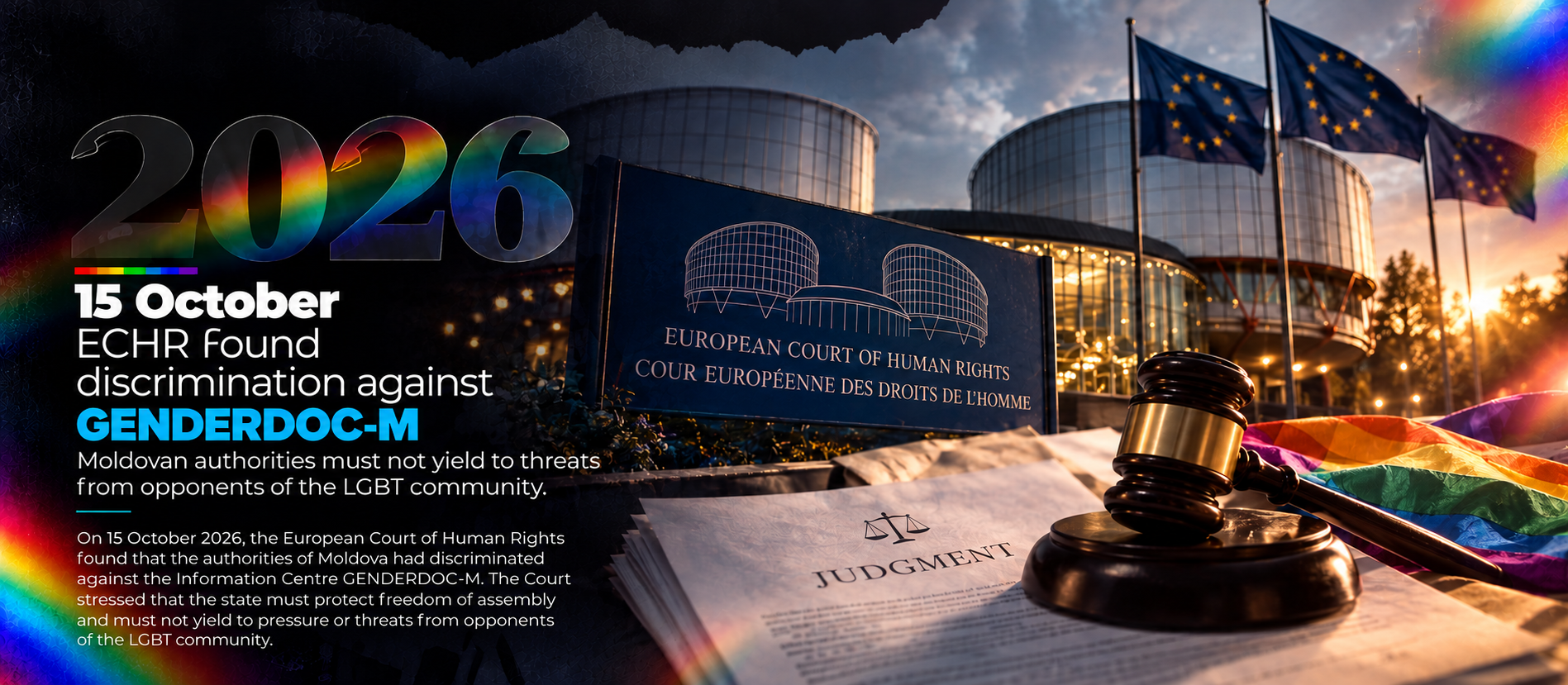
ECHR finds discrimination against the GENDERDOC-M Information Centre: Moldovan authorities must not give in to threats from opponents of the LGBT community
 22.05.2026
Human Rights
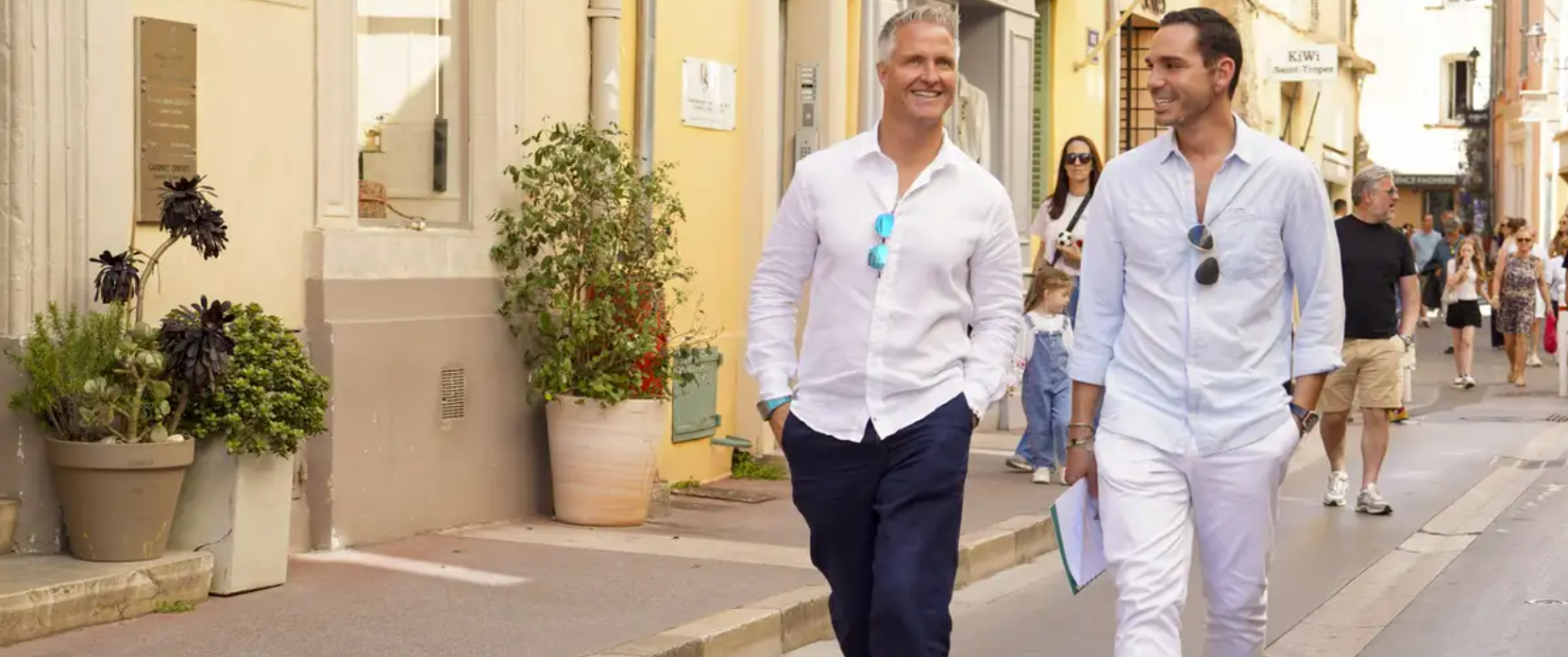
Schumacher's brother marries a Frenchman: The wedding will take place in Saint-Tropez