The 2026 “Involved Hearts” Award Winners: the names that marked the LGBTQ+ community
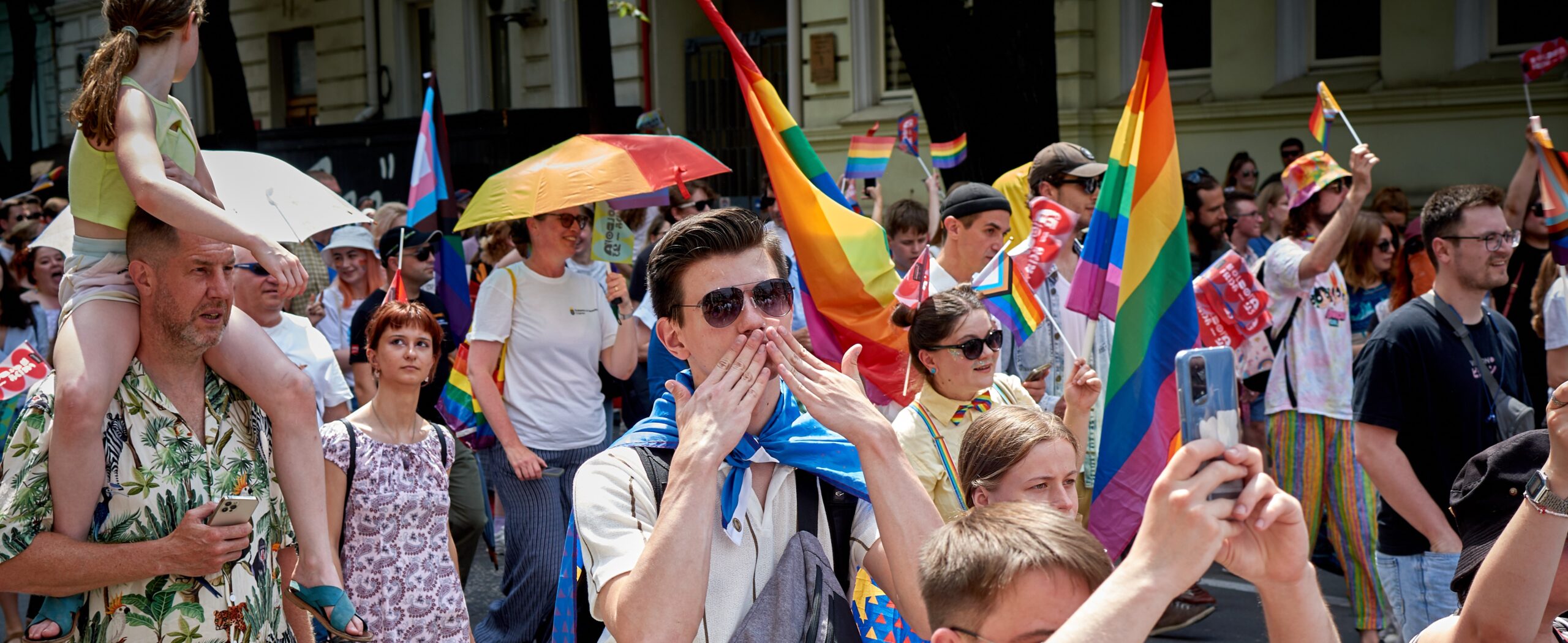
June 2026 will mark the landmark 25th edition of the Moldova Pride festival. In keeping with a cherished tradition, ahead of this important event we announce the names of those who have made a significant contribution to building and developing Moldova’s LGBT+ community: the recipients of the 2026 “Inimi Implicate” (“Committed Hearts”) Award.
This year, the award goes to Meie Kiel (the Netherlands) and Nigel Warner (the United Kingdom).
MEIE KIEL — MORE THAN A DIPLOMAT
For Moldova’s LGBT movement, her presence brought a rare and seemingly impossible experience: encountering understanding where rejection was usually expected.
An official at the Dutch Ministry of Foreign Affairs, she built her career between The Hague and diplomatic postings abroad. In the early 2000s, Kiel served as First Secretary at the Embassy of the Netherlands in Kyiv, coordinating cooperation with civil society in Ukraine and Moldova. It was then, at a time when Moldovan civil society was only beginning to take shape and LGBT rights remained an almost taboo subject, that she made a choice: to stand alongside them.
At the time, the Netherlands was considered the world’s most progressive country. It soon became the first to recognise same-sex marriage and the first to make LGBT rights a key foreign policy priority.
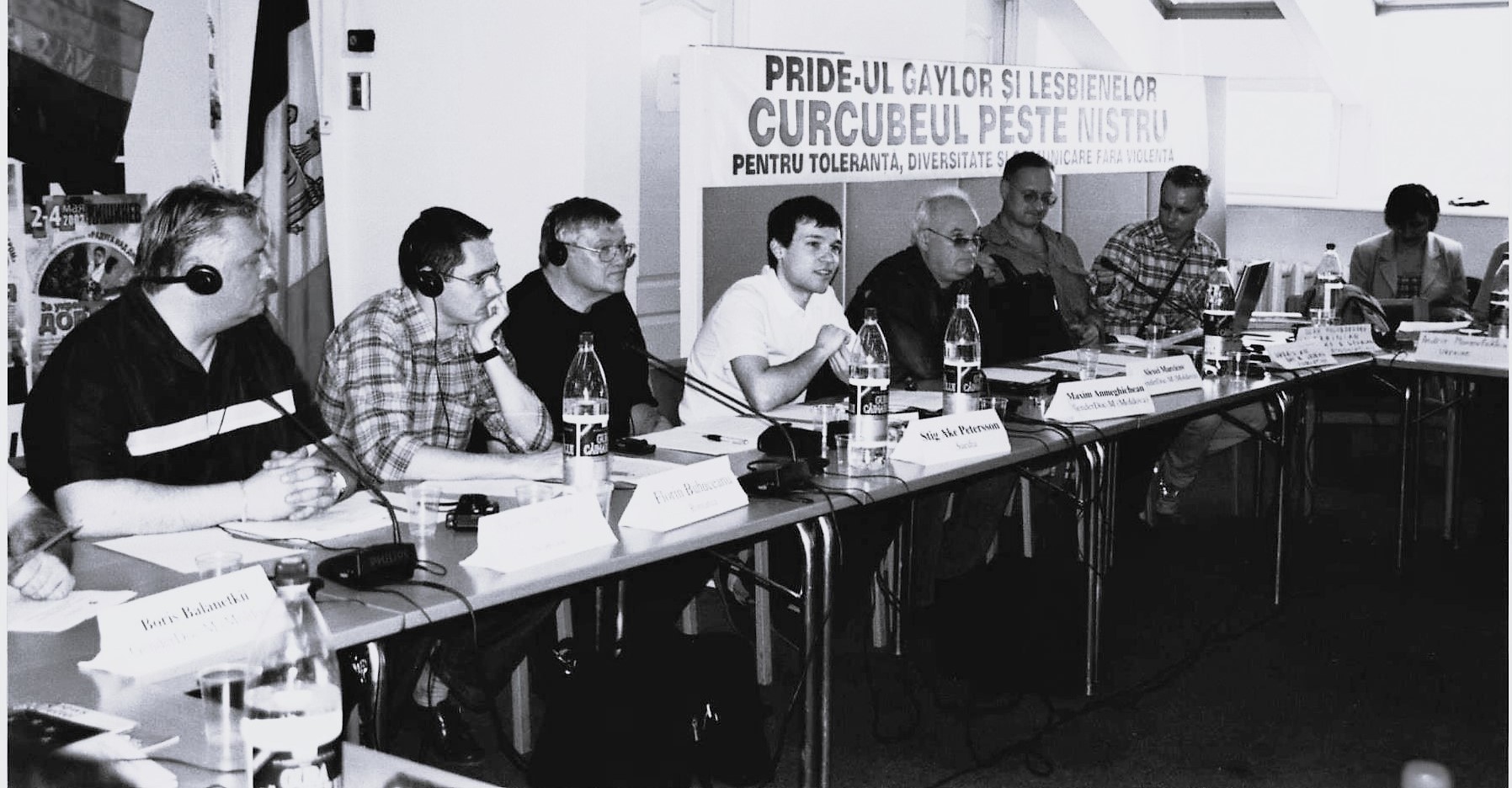
In 2000, she became the first foreign government official to meet with Moldovan LGBT activists Alexei Marcicov, the founder of Moldova’s LGBT movement, and Maxim Anmeghichean, GENDERDOC-M’s first director, who was just 19 at the time. That meeting changed a great deal. Instead of the familiar fear, contempt or silent rejection, they encountered something different: respect, engagement and a sincere belief in their right to exist.
It was Kiel who approved the first grant GENDERDOC-M ever received from a foreign state, back in 2000. That support made possible the Moldovan LGBT community’s first media project, Zerkalo (Mirror) magazine, an information centre, and training programmes for lawyers, journalists, psychologists and NGO leaders. Work with young members of political parties also began. Most importantly, there was now tangible support.
For many activists, that meeting became a turning point from which there was no going back. For the first time, they felt they were not alone. Following the successful implementation of the first project, Meie helped develop cooperation between the Dutch organisation COC, regarded as the world’s oldest and most experienced LGBT organisation, founded back in 1948, and the activists just starting out at GENDERDOC-M. As a result, the ministry approved what was arguably the most important project in strengthening the organisation, and Meie became its first supervisor. Through this project, GENDERDOC-M secured its own office and permanent staff. Most importantly, Moldovan activists gained access to the immensely rich experience of their Dutch colleagues.
The years passed. Meie Kiel continued her career, moving into new roles, but never lost touch with Moldova. Today, more than a quarter of a century later, she is expected to return for Pride’s 25th anniversary, a testament not only to shared memories, but also to a real, living bond that has stood the test of time.
NIGEL WARNER — THE MAN WHO CHOSE NOT ONLY TO SPEAK ABOUT RIGHTS, BUT TO TEACH OTHERS HOW TO FIGHT FOR THEM: SYSTEMATICALLY, COMPETENTLY AND THROUGH TO RESULTS.
He is a legend of the global LGBT movement, easily ranking among the ten people who have contributed most to its formation and development. Yet his work within the movement has always been entirely voluntary, and he has also contributed generously from his own resources. He has always preferred to remain behind the scenes, never seeking attention, recognition or awards. Despite the scale of his contribution, he is one of the world’s most modest, kind and generous activists.
His journey in the LGBT movement began in the late 1970s, long before the subject entered mainstream public debate. He was there at the beginnings of the international movement: he was among the founders of ILGA and, later, ILGA-Europe, where he eventually took on one of the most demanding areas of work: engagement with the Council of Europe.
Warner was not a lawyer by profession. In practice, however, he became one through experience, through dozens of cases, and through understanding how the system works and how to make it work. He mastered the Council of Europe’s complex machinery and made it accessible to those furthest removed from it: grassroots activists. Warner played an important role in the European Court’s 1981 ruling prohibiting criminal prosecution for same-sex relations. Later, when the USSR collapsed and its former republics began joining the Council of Europe, he successfully helped secure the decriminalisation of homosexuality in Moldova and other former republics, the last being Armenia in 2003. He understood that, for people working under pressure, often in a language other than their own and far from Strasbourg, the very idea of international protection could seem beyond reach. He made it his mission to change that reality.
When GENDERDOC-M’s first director, Maxim Anmeghichean, became the youngest board member in ILGA-Europe’s history, Nigel became his mentor and teacher. In doing so, he helped the Moldovan movement use European law more effectively to advance LGBT rights at home. Later, they worked together within the Council of Europe. This was a time when the movement in Central and Eastern European countries was only beginning to emerge and immediately encountered fierce resistance. Bans, violence and pressure were widespread in Poland, Latvia, Serbia, Russia and Moldova. Pride events were banned, activists intimidated and rights ignored. Many began seeking justice at the European Court of Human Rights. Through training, support and guidance, Warner helped LGBT organisations in Eastern Europe use European human rights mechanisms as practical tools for change rather than abstract concepts. His assistance was particularly important in bringing cases before the European Court and monitoring the implementation of its judgments.
In Moldova, Warner became involved in the landmark case of GENDERDOC-M v. Moldova, concerning the right to freedom of assembly. The case produced more than a legal ruling: it established a precedent that, over time, paved the way for Pride to take place without bans. Warner’s work demonstrated a simple but important point: international pressure is meaningful only when followed by persistence, professionalism and a commitment to seeing a case through to the end. That is when decisions on paper become changes in people’s lives.
Many years after his first visit to Moldova, Nigel Warner will return to Chișinău to take part in the events of the anniversary edition of Moldova Pride. This time, he will come to see what the LGBT+ community in the Republic of Moldova has achieved, thanks in part to his contribution to establishing and developing the GENDERDOC-M Information Centre.
 22.05.2026
Human Rights
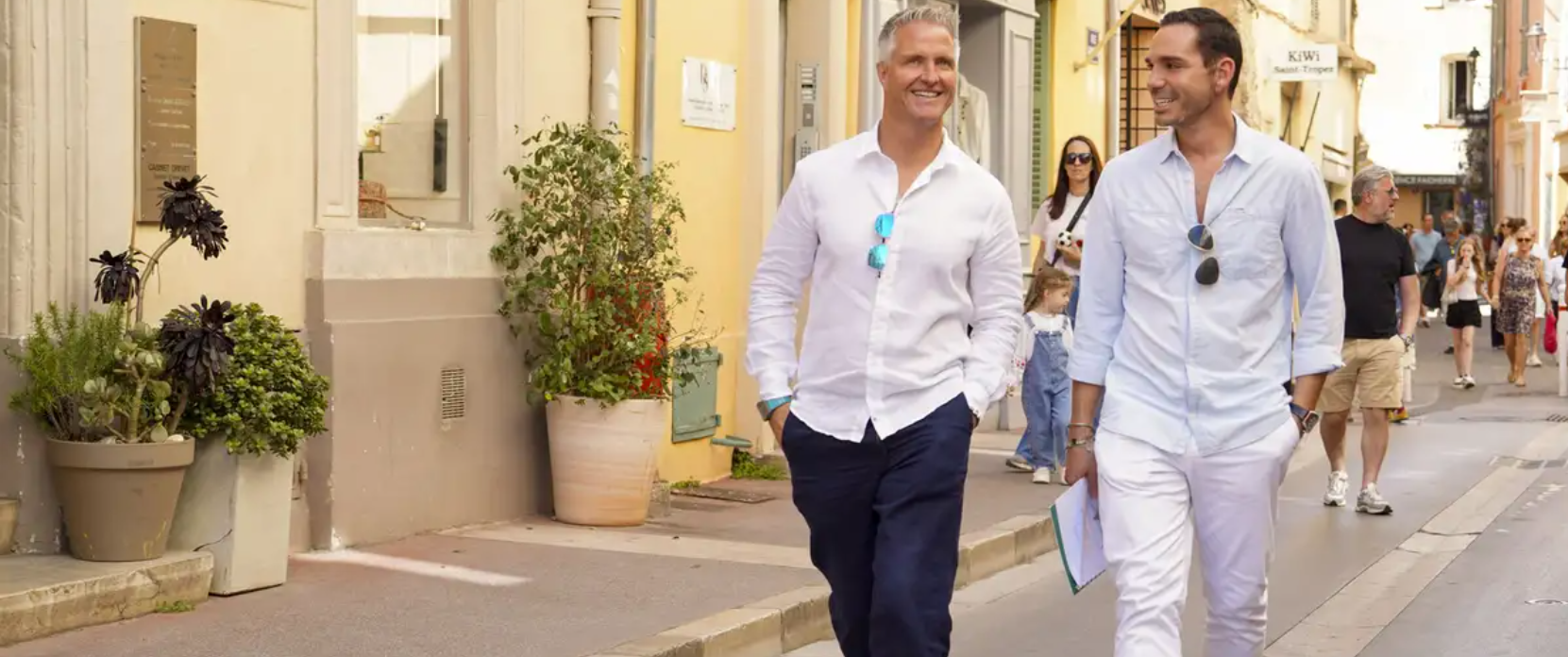
Schumacher's brother marries a Frenchman: The wedding will take place in Saint-Tropez
22.05.2026
Human Rights
Schumacher's brother marries a Frenchman: The wedding will take place in Saint-Tropez
 14.05.2026
Human Rights
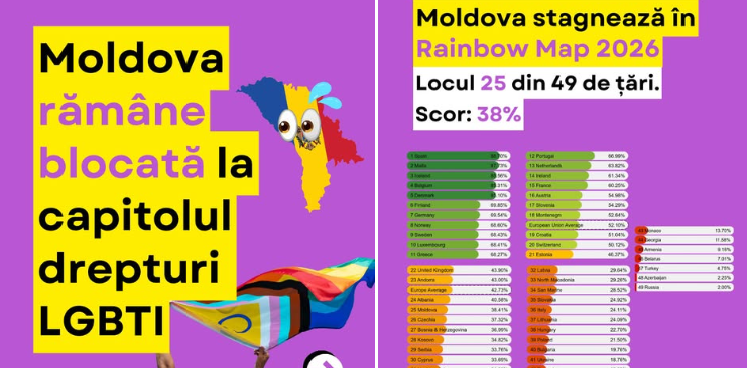
The Republic of Moldova stagnates in the ILGA-Europe Rainbow Map 2026 ranking: 25th place out of 49 countries, with the same score of 38%.
14.05.2026
Human Rights
The Republic of Moldova stagnates in the ILGA-Europe Rainbow Map 2026 ranking: 25th place out of 49 countries, with the same score of 38%.
 24.04.2026
Human Rights
Man convicted of domestic violence against transgender minor. Court upholds gender identity-based prejudice
24.04.2026
Human Rights
Man convicted of domestic violence against transgender minor. Court upholds gender identity-based prejudice